

👋 Hello to new subscribers from the video game, medical technology, social services, heavy construction, and real estate industries. We’re all in this together.
🎖️ Veterans Day (U.S.A.) is Nov. 11
Do You Really Need Another Employee App?

Companies deployed 89 different apps on average last year, up from 58 in 2015, according to Okta. At large employers, that figure is now 187.
Of those apps, close to 30% are duplicative or add no value, according to a survey of senior business leaders.
A recent study of 20 teams across three big employers found that workers toggled between different apps and websites 1,200 times each day.
Why it matters: That’s just under four hours a week, or roughly five weeks a year, spent hitting the Alt-Tab key.
“Basically, how we work is itself a distraction,” said Rohan Narayana Murty, founder and chief technology officer at Soroco, which uses machine learning to map out how work gets done, and conducted the toggling study. “All day long, we just repeatedly switch between disparate applications.”
Read more (Bloomberg; subscription), unless you get distracted.
🔁 I’ve argued time and time again:
Employee comms might be part of the problem because a shallow form of “engagement” is an important metric for “success.”
Employee comms is pressuring employees to “engage” in order to generate metrics that make the output seem worthwhile.
We’re distracting our coworkers with soft demands to respond to our pings, dings, chirps, chimes, social share buttons, and empty comment fields. We’re increasing their anxiety for the sake of our engagement metrics.
This isn’t entirely all comms’ fault. It’s a systems issue. Other departments, like IT, HR, Security, and others, must also share some of the blame for fostering a work environment taped together with 58, 89, 187(!) applications.
Before you hit send on your 2023 budget request for an employee app, ask yourself: is the app a solution looking for a problem? Or is it just another part of the problem?
Wo Bist Du?
Quick Hits
🤔 How is your newsletter performing? Maybe you can learn from the Financial Times. With open rates becoming less reliable, the FT needed a way to better measure the success of their email strategy. They found it through surveys. (Inbox Collective)
💸 IC pros with at least eight to 10 years of dedicated IC experience tend to have salaries that are 22% higher (~$20,000 USD more) than peers with the same level of professional experience but less IC experience. All that and more in the new Internal Communications Salary Report. (Staffbase + Brilliant Ink)
🛒 Cynthia Horiguchi, director of Comms for Instacart, says her job is to “ask smart people dumb questions.” Can you relate? (The Switchboard)
Retention Is a Comms Outcome

Turnover is a very expensive problem. Attrition at Amazon, for example, costs the company an astonishing $8 billion a year, or ~25% of its annual profit.
Meanwhile, here’s Brian Niccol, CEO of Chipotle:
We’ve got more turnover than we like, and the capabilities of those people that are in our organization are lower than they’ve been, because they haven’t been with the company long enough to get a lot of experience. (Oct. 27 issue of Fortune CEO Daily)
Only 10% of job openings are filled by internal candidates, despite the fact that’s a better predictor of retention than compensation. That’s according to a study from MIT, NYU, and Revelio Labs.
😲 That’s a crazy to stat to me — anyone else?!
🦸 Good news! Employee comms can help!
Here are a few easy ideas you can use to help HR recruit from within:
In your weekly newsletter, feature a “hot job” opening somewhere in the middle (that way more people see the listing; not everyone gets to the bottom of the newsletter).
Cross-post that “hot job” on the intranet home page.
Profile a team that is hiring. Give them a write-up that makes them sound like the most amazing team ever. Add links to open roles and include contact info for the hiring manager so employees can quickly learn more.
At your town hall feature job openings on the pre-show video or on the digital signs in the room while employees wait for the event to begin.
Speaking of digital signage, are job openings displayed on screens around the company?
Don’t forget to track:
Clicks to the job openings you promote. (For digital signage and video, use a referral code or better yet, a QR code.)
The number of employees who then apply for the role.
How many employees are hired through your efforts.
Promoting internal job growth is a business outcome (read: $$$) your team can foster without too much extra work. The dividends (pun!) will pay out in many ways, such as:
HR and hiring managers will beg for their open role to be promoted to all employees, which reinforces to management the relevancy of internal comms.
The money HR saves on recruiting external candidates can be used for other recruiting efforts. Imagine $$$ diverted from headhunters to set up booths at job fairs in under-represented communities because of your efforts. (Go ahead and imagine it, because that’s a plausible outcome!)
Is that the role of your company, to make you happy?
—Trudy Lewis discussing employee engagement on the Calm Edged Rebels podcast
Interesting Opportunities
Block - Head of Internal Comms (remote, U.S.A.)
If you’re genuinely interested AND qualified, let me know. I may be able to make an intro.
Clorox - Manager, Corp Comm (Oakland, hybrid/remote??)
Denholm Associates - Global Corporate Communications Manager - Whisky Industry (Glasgow, hybrid) Steph Buckley is the hiring manager
MongoDB - Senior Internal Comms Manager (London)
What Actually Counts?
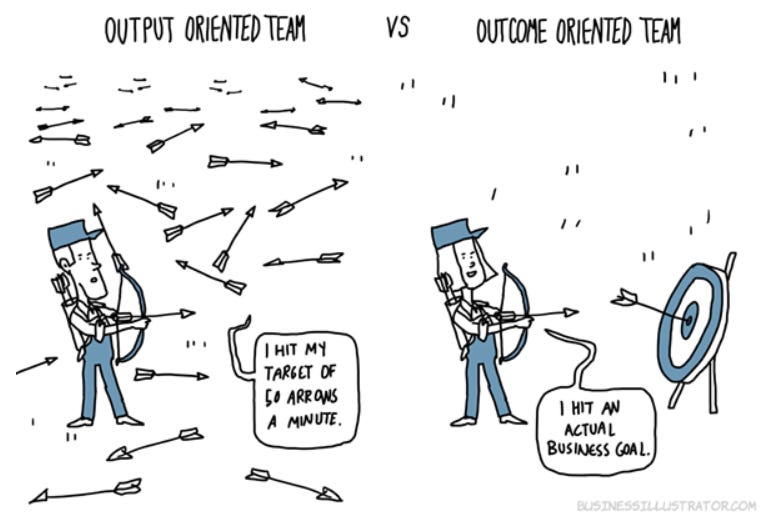
Volumetrics are important for your comms. Behavioral metrics support business outcomes. Learn more (Mister Editorial; membership)
😎 You’re caught up!
Thank you for being a part of Mister Editorial.
Read past editions of Mister Editorial here.
If you’re enjoying what you’re reading, please consider recommending it to others. They can sign up here. Browse the most popular content here.
Have feedback? Send me a note at editorshaun@gmail.com. Connect with me on LinkedIn and Twitter.
Disclaimer: Besides running Mister Editorial, I am the editor-in-chief of Digital Publications at Lam Research. The views in this newsletter are my own.
Mister Editorial is a reader-supported project. To receive updates and support my work, consider becoming a free or paid member.