
ICYMI: Cheerleading, Sephora, & Time Confetti
4 comms things and one non-comm thing you might have missed

Good morning, afternoon, and evening!
📺 Programming note: I am a panelist in the upcoming webinar “Think Differently: How to Ensure Your Employee Communications Drive Business Outcomes” hosted by Poppulo. It’s happening on November 17. Register for free.
📢 Next week: An exclusive interview with Hanna Lundgren, Co-worker Communication Leader for IKEA.
📝 Here's the internal memo sent to employees as AT&T's WarnerMedia begins layoffs
In case you missed it…
1. Surprise: Motivating Language Enhances the Employee Experience

The academic paper “Examining the Effects of Internal Communication and Emotional Culture on Employees’ Organizational Identification” is the “International Journal of Business Communication Outstanding Article of the Year,” according to the Association for Business Communications.
The authors explored the emerging role of positive emotional culture within organizations and asked how a symmetrical internal communication system and leaders’ use of motivating language contribute to fostering a positive emotional culture featured by joy, companionate love, pride, and gratitude. (By “symmetrical” they mean “two-way.”)
In addition, the study examined the linkage between a positive emotional culture and employees’ organizational identification.
The authors offer several strategic insights:
Leaders at different levels in the organization should recognize the benefits of motivating language. Leaders should use meaning-making, empathetic, and direction-giving languages to enhance employees’ collective understanding of who we are, what we believe in, why we exist, and where we are going as an organization.
Organizations should invest in various communication channels to gather employees’ feedback.
Organizations must adopt different approaches to fostering a positive workplace emotional culture. The authors suggest tactics such as employing mobile apps to track employees’ mood change, celebrating employee milestones, and installing appropriate office décor and furnishings.
😉 Glad to see academics finally catching up to what IC practioners know.
Ask the authors for a copy: @april_cenyue, @RitaMen_UF, and @fergi22.
2. How Sephora Improved Employee Comms to Reopen Shuttered Stores

Sephora—the French-based cosmetics retailer—has 2,000 retail associates spread across 530 stores in the U.S. and Canada. To prepare employees for reopening after lockdown, the company dramatically changed the way it communicates with its dispersed workforce.
Retail Zipline stepped in to create a platform that is accessible via mobile, tablet, and desktop devices and covers four types of communication:
Nice-to-know information, such as letters from the president or community events;
Need-to-do information, such as posting marketing materials, moving inventory, or sanitizing handrails;
Evergreen resources, including policy and procedures, best practices, and standard operating procedures; and
Dialogue, discussion, and debate channels, so people can share ideas about what’s working and what’s not in a collaborative group setting.
“COVID-19 completely changed the way we needed to operate during these times to best protect our communities, our shoppers, and our employees,” says Joan Willat, SVP of Store Experience and Business Operations at Sephora.
“Despite these challenges, we’ve been able to make operational changes, reopen our stores, and continue to deliver on the great client experience we are known for.”
3. Successful Remote Teams Communicate in Bursts

Two professors present new research that suggests remote communication is most effective when teams coordinate to:
communicate in rapid-fire bursts, followed by periods of uninterrupted “deep work time”;
exchange a broad diversity of information; and
align their schedules to communicate synchronously rather than asynchronously.
Our research suggests that such bursts of rapid-fire communications, with longer periods of silence in between, are hallmarks of successful teams.
In other words, worry less about sparking creativity and connection through watercooler-style interactions in the physical world, and focus more on facilitating bursty communication.
“Burstiness” is a thing.
Fascinating: The researchers found that NOT having access to visual cues, as is the case in audio-only calls, actually increases equality in speaking time. This positively affects collective intelligence.
Adding video to these calls reduces equality in speaking time—and thus collective intelligence.
Audio-only remote meetings can be more effectivein many cases.
advertisement
Learn more about ConnectMinds.
4. IC as seen from the Middle East and Asia

Take time to see what our peers are talking about in the Middle East, Singapore, and India. A great idea may come from another experience, another culture.
The Comms Survival Guide 2020 webinar addressed the trends in the PR and communications industry with a panel of experts. (Dubai/Middle East)
Analysis: The Electrification of Employee Engagement. To quote: “Spurred by the challenges of change management and Covid-19, internal communications is emerging from the crypt—but will the interest endure?” (Singapore)
Aniisu Verghese of Intraskope fame has created an Internal Communications Fundamentals training course. (India)
5. Time Confetti and the Broken Promise of Leisure
Related to the article mentioned above…
From Time Smart: How to Reclaim Your Time and Live a Happier Life by Ashley Whillans:
Leisure has never been less relaxing, mostly because of the disintermediating effects of our screens. Technology saves us time, but it also takes it away. This is known as the autonomy paradox.
We adopt mobile technologies to gain autonomy over when and how long we work, yet, ironically, we end up working all the time.
Long blocks of free time we used to enjoy are now interrupted constantly by our smart watches, phones, tablets, and laptops.
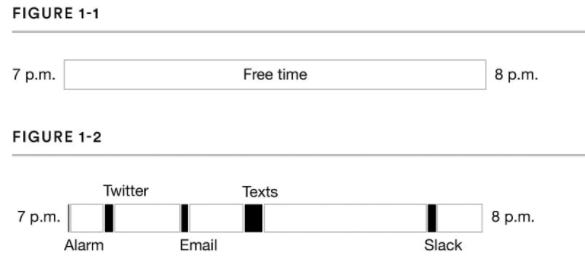
Stress spurs busyness, which creates stress, which spurs busyness.
Working toward time affluence is about recognizing and overcoming the time traps in our lives and intentionally carving out happier and more meaningful moments each day.
Paid subscribers to Mister Editorial get access to exclusive content, such as…