

Hello everyone! Thanks for spending part of your day with me.
👋 Welcome new subscribers from NYC, London, and Oslo!
💡 Internal comms can borrow from Marketing’s successes. Register for this free webinar Transforming Marketing at Scale at IBM to see what you can learn and apply to your practice (Integral, IBM).
In case you missed it…
1. The Basecamp Saga

Basecamp, the developer of collaboration and project management software, has been under the spotlight for two weeks after banning political discussions at work. Jason Fried, Basecamp’s co-founder and CEO, detailed the policies in a blog post calling “societal and political discussions” on company messaging tools “a major distraction.”
The decision has resulted in one-third of employees leaving the company.
But…the company is sticking to the policy.
If you want to follow the saga:
The blogs of Jason Fried and co-founder and CTO David Hansson
Inside the all-hands meeting that led to the blow up (Platformer)
Some tech leaders have come out in support of the policy. Coinbase initiated a similar ban last year.
But Corporate America is silent. Interesting, given how woke and politically loud CEOs have been the past couple of years, most recently around voting laws in Georgia.
Much of the outrage is, no surprise, playing out on Twitter among employees who quit on principle and a few politicians. Otherwise, conversation about the controversial move is rather muted.
💭 MY THOUGHT: On the socio-political front, the past few years have been emotionally draining. Maybe corporate leaders and employees alike are exhausted and just want a break from politics.
Work can be seen as a safe, quiet place from outside noise.
2. Where Is the Signal?

Information overload and ineffective communication are the main barriers to employees understanding company benefits, according to a recent survey.
A key reason why employees do not feel engaged with their group protection policies is that many feel besieged by the wider corporate “noise.”
3. Meet the New Boss…

The average tenure of a chief marketing officer (CMO) at 100 of the top U.S. most-advertised brands is 40 months, or just over three years. CMOs often oversee the internal comms function, so frequent changes in leadership can cause confusion and be demotivating.
Other top executives typically stay in place longer.
CEOs average 80 months at the helm.
Chief Communications Officers (CCOs) stay for 73 months.
Chief Human Resource Officers (CHROs) stick around for 60 months.
Start counting the months from when your boss took the leadership role. Something to keep an eye on…
📢 I just kicked off a nine-part series that examines how internal comms professionals and teams can avoid The Innovator's Dilemma. The series concludes with a proposal for internal comms to adopt a truly disruptive communication effort. This series is available exclusively to Mister Editorial’s paid subscribers.
4. Industry News

Vimeo’s Your Internal Comms Toolkit (Vimeo)
Ragan Communications acquires Communications Week (Businesswire)
Move over Clubhouse: Twitter expands Spaces to accounts with 600+ followers (TechCrunch)
Post-Pandemic Office Etiquette? (The Economist)
Four Keys to Improving Your Organization’s Internal Communications (Behavioral Healthcare Executive)
5. Embrace Downtime
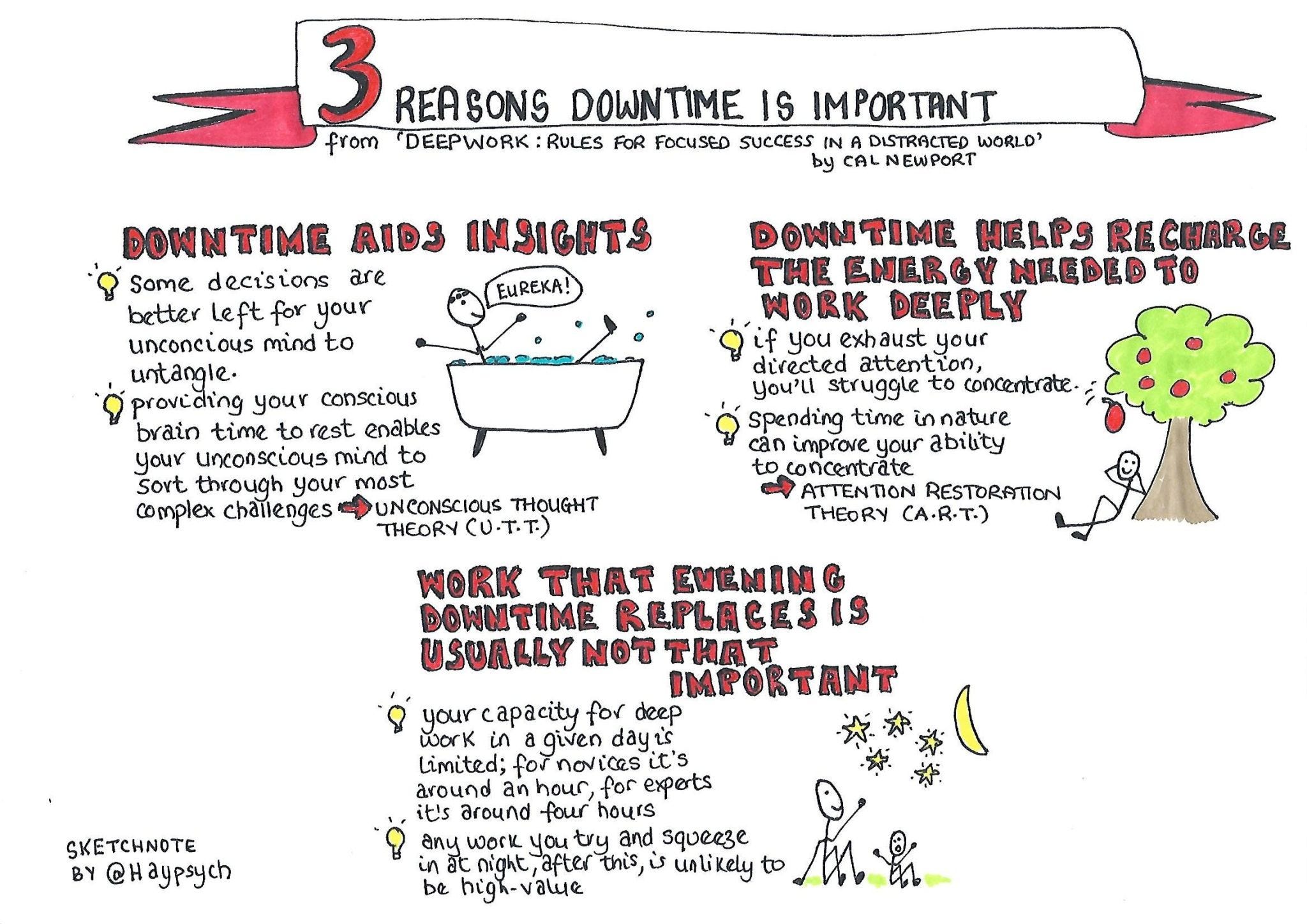
Anyone who has worked with me for a while knows how much I appreciate Cal Newport’s Deep Work.
It’s the book I have gifted the most.
Newport’s ideas on how to work more deeply and with more focus have been life-changing for me. He also speaks about the importance of downtime and how embracing stillness, boredom, and rest are beneficial for your intellectual, creative, and professional pursuits. I’m passing along this illustration in hopes it will spur you to pick up Deep Work.
But first, get some rest.
.
Connect with me on LinkedIn and Twitter | Mister Editorial archive | editorshaun@gmail.com
Disclaimer: Besides running Mister Editorial, I work in employee comms at Splunk. The views in this newsletter are my own.
.